


109,817
Number of men, women, and children on the national transplant waiting list.
How many people are waiting for a transplant? Which organs are most needed? Who receives transplants? Explore data from the Organ Procurement and Transplantation Network (OPTN) to better understand the need for organ donation and the impact of donation and transplantation in the United States.

12
people die each day waiting for an organ transplant.

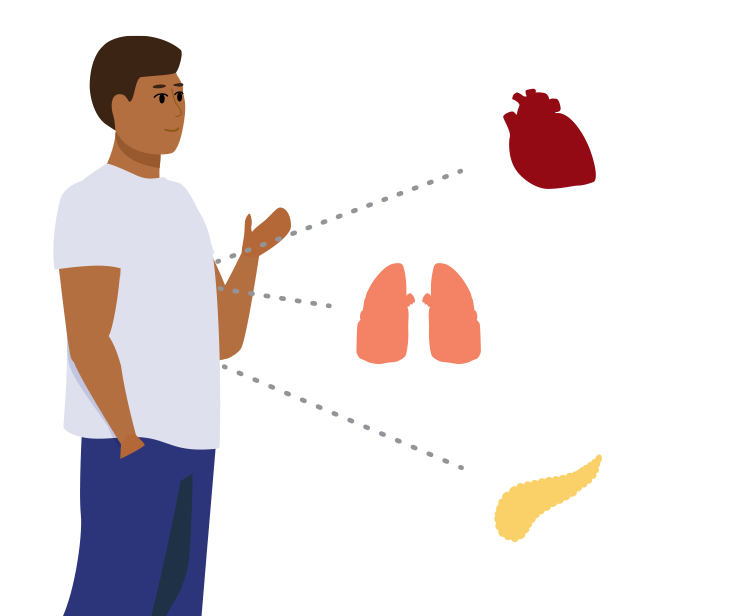
Every donor can save 8 lives and enhance over 75 more.
YOU can help.
More than 49,000
transplants were performed in 2025.


Every 7 minutes another person is added to the transplant waiting list.
These national statistics provide a snapshot of the need for organ donation, the lives saved through transplantation, and the continuing need for more registered organ, eye, and tissue donors.
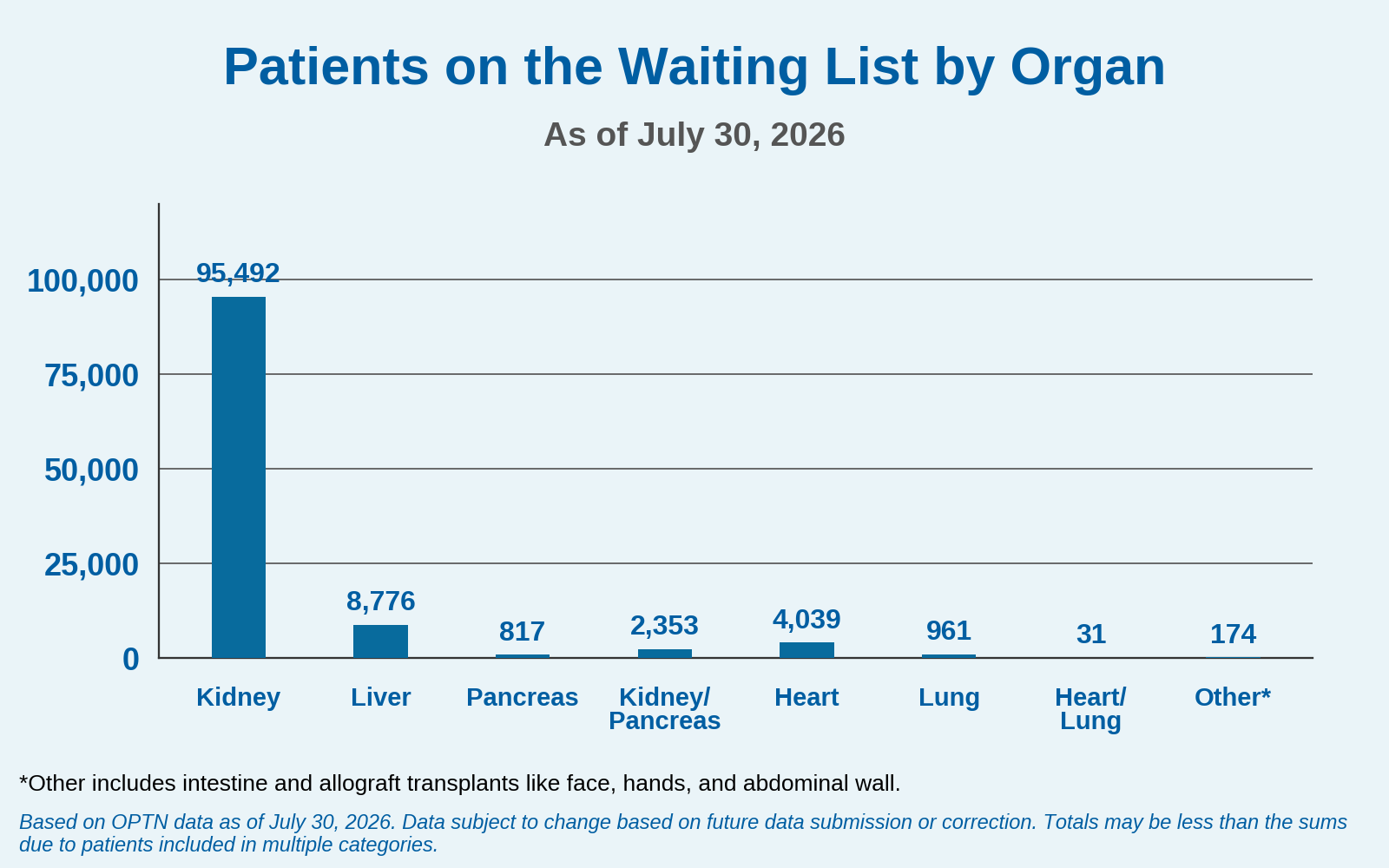
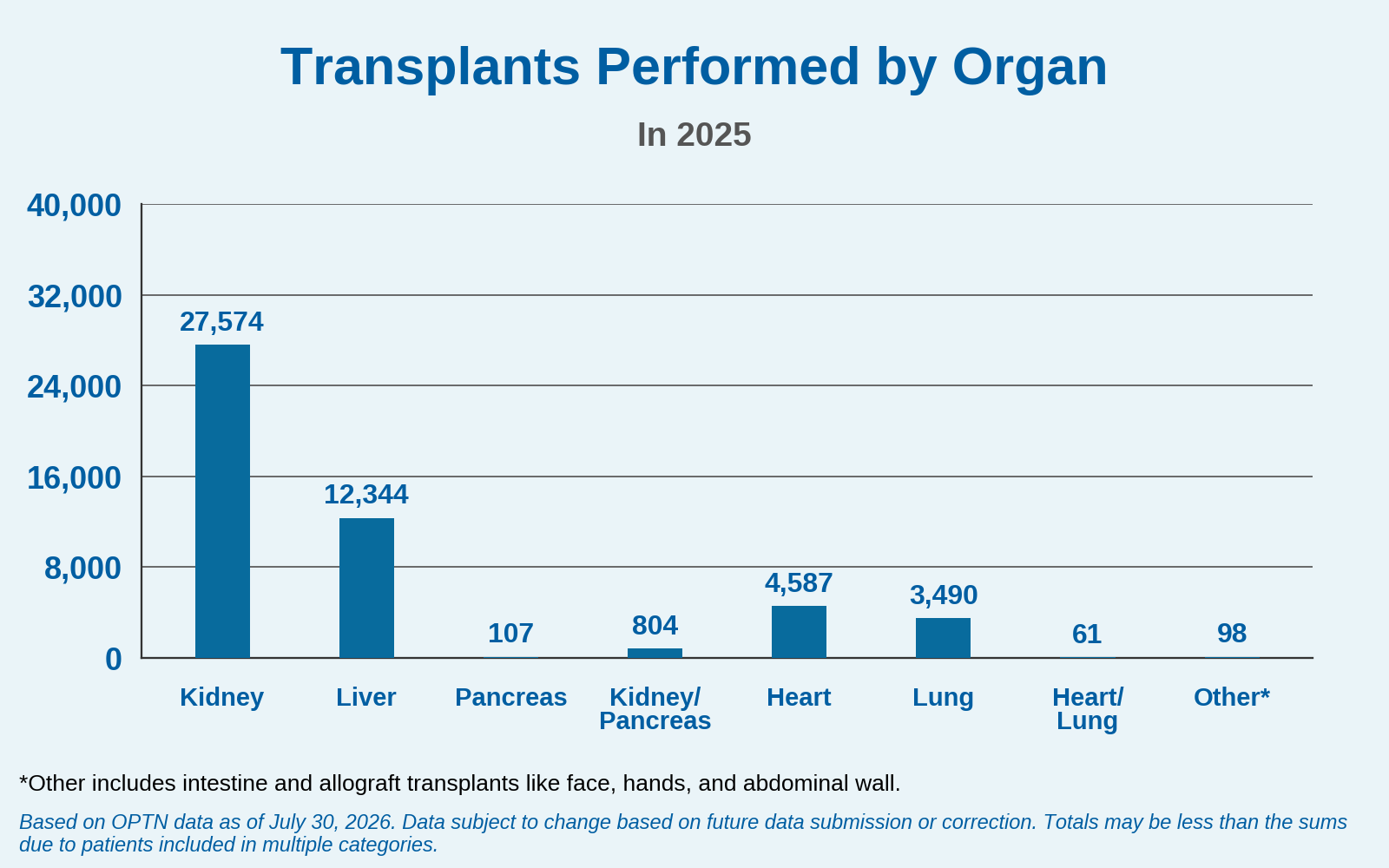
These charts tell two different parts of the story. The "Patients on the Waiting List by Organ as of July 30, 2026" chart shows how many people were waiting for each type of organ on a specific date. The "Transplants Performed by Organ" chart shows how many transplants were performed during the last year. Together, they provide a high-level picture of the need for organ transplants and the number of organ transplants performed. Because people are added to and removed from the transplant waiting list every day, the Waiting List table represents a snapshot in time instead of a yearly total.
Kidneys are the organ most commonly needed for transplantation. As a result, they account for most people on the transplant waiting list. Although kidney transplants make up the majority of transplants performed each year, thousands of people continue to wait for a kidney transplant.
Behind every number is a person waiting for a lifesaving transplant—and every donor has the potential to make a difference. Learn the facts, explore the data, and see how organ donation changes lives. When you're ready, take the next step by registering as an organ, eye, and tissue donor.

Make more possible.
Find more statistics
Looking for more information? The Organ Procurement and Transplantation Network (OPTN) maintains the national database for organ donation and transplantation in the United States. You can explore more statistics and build custom reports using OPTN national data.
The Scientific Registry of Transplant Recipients analyzes OPTN data and issues an Annual Data Report on national transplants by organ.
The HRSA Data Warehouse Organ Donation and Transplantation Dashboard displays national end-of-year data and yearly trends.
Learn more about organ transplants by the numbers
The statistics below provide information about the people waiting for transplants, the donors who make transplantation possible, and the lives impacted by organ, eye, and tissue donation.
More than 109,000 people in the United States are currently waiting for an organ transplant. Like the country itself, the transplant waiting list includes people of every age, ethnicity, and gender. The charts below provide a closer look at who is waiting and the organs they need.
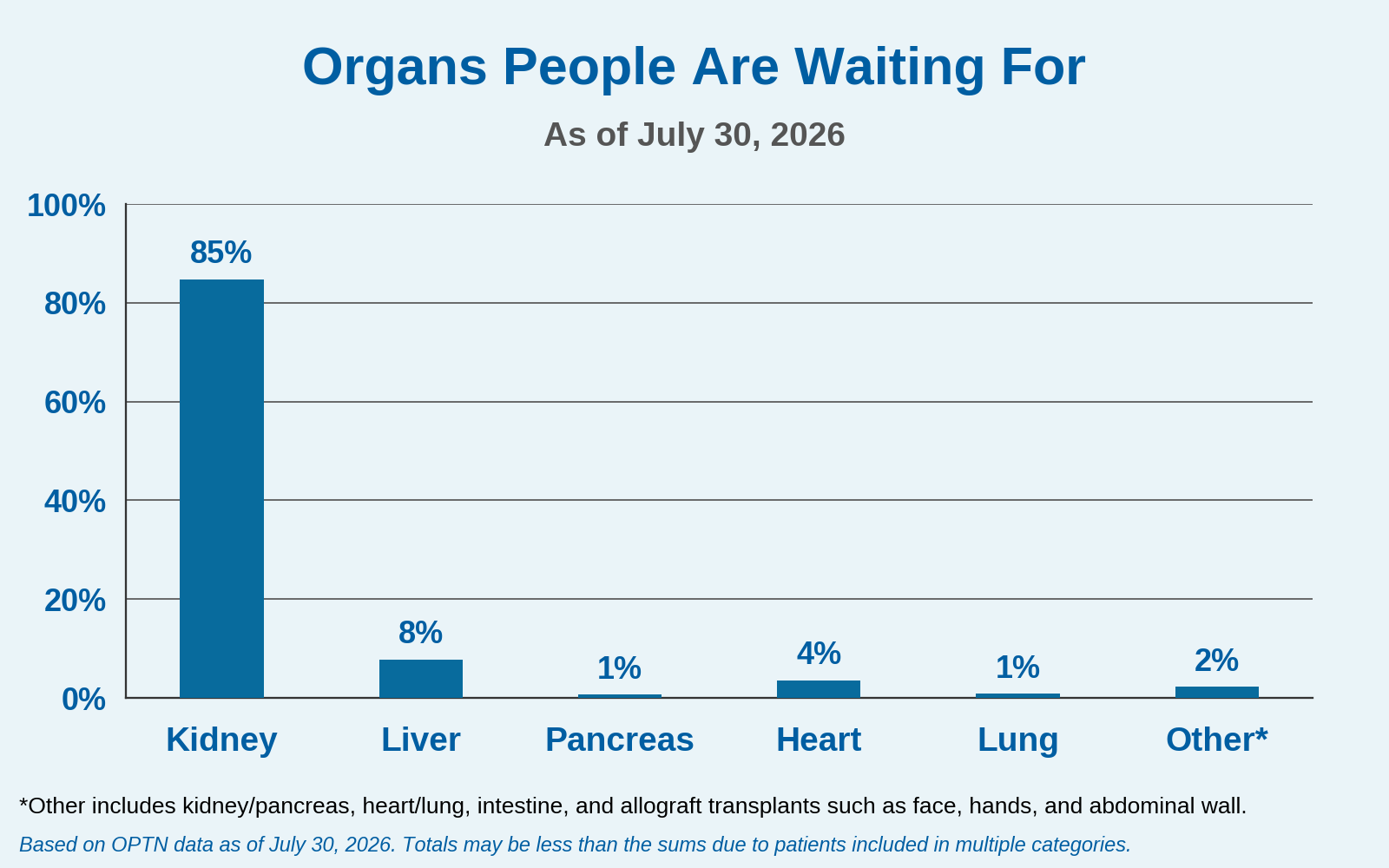
Detailed description of Organs People Are Waiting For
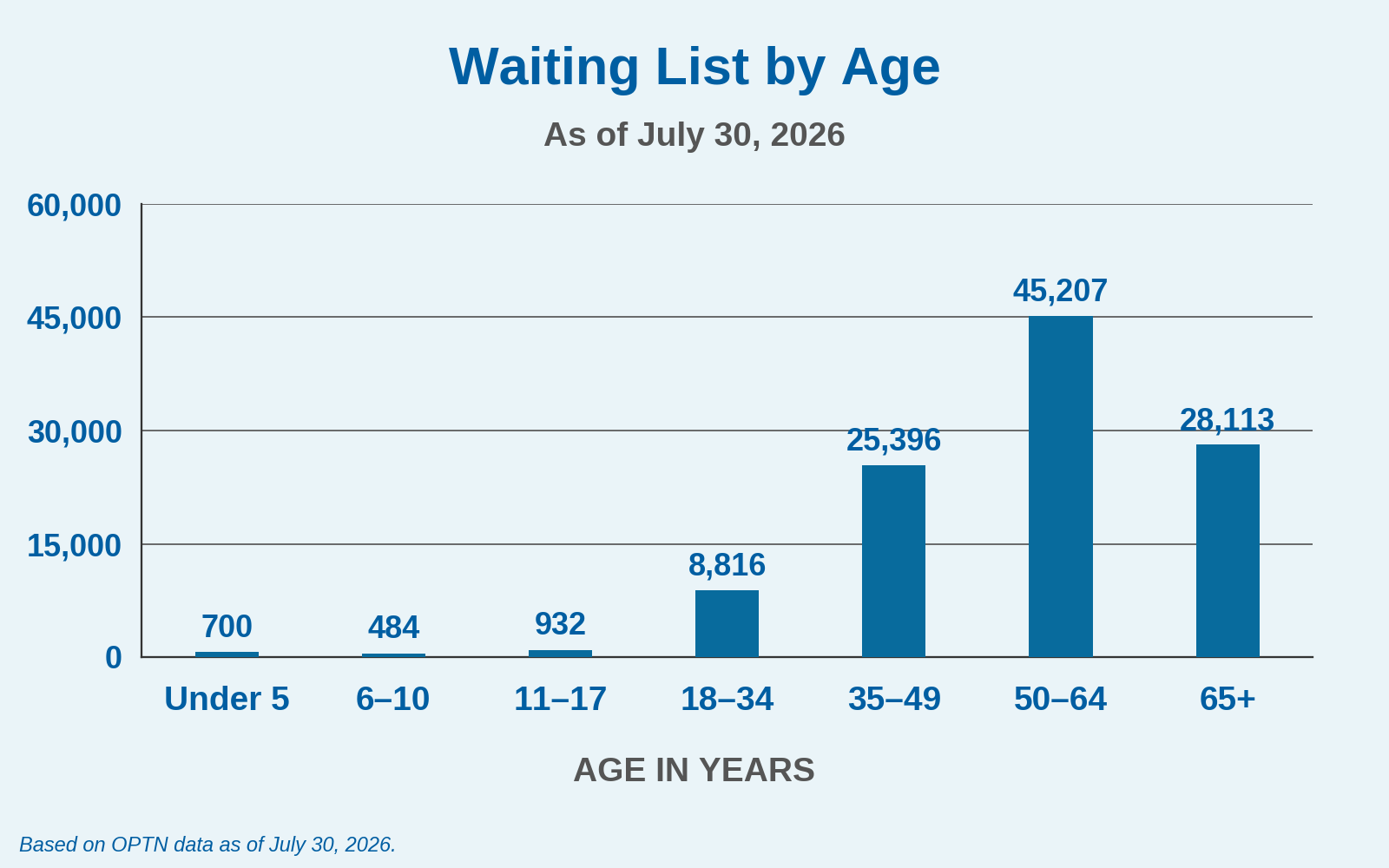
Shared ethnicity is NOT a requirement for matching organ donors and recipients. Matches between donors and recipients of different ethnicities are very common.
Even so, a larger donor registry gives everyone on the transplant waiting list a better chance to find a good donor match. Because the genetic markers used to match organ donors and recipients are inherited, people with rare markers are more likely to match someone with a shared racial or ethnic background. Learn more about how organ donors and recipients are matched.
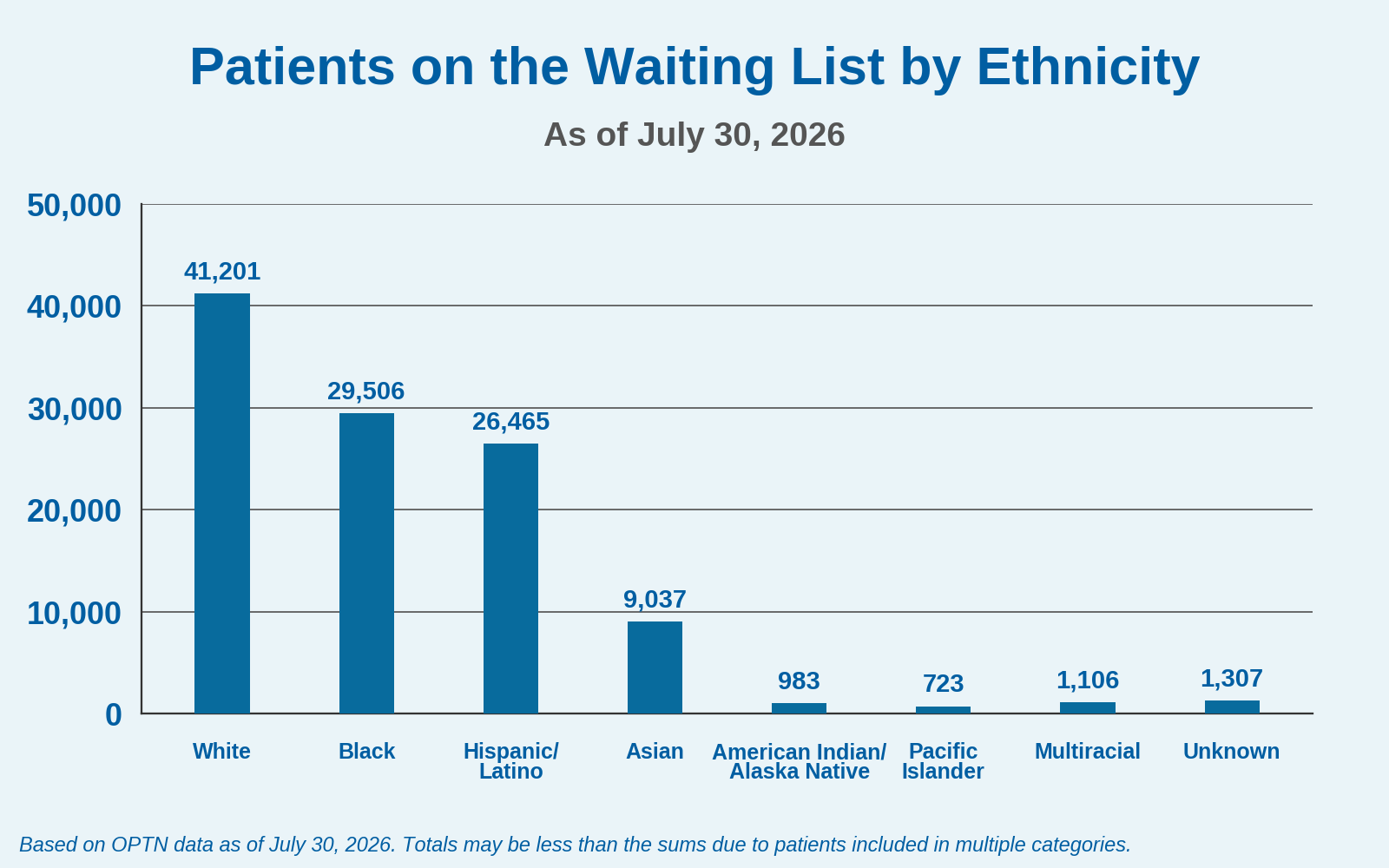
Detailed description of Patients on the Waiting List by Ethnicity
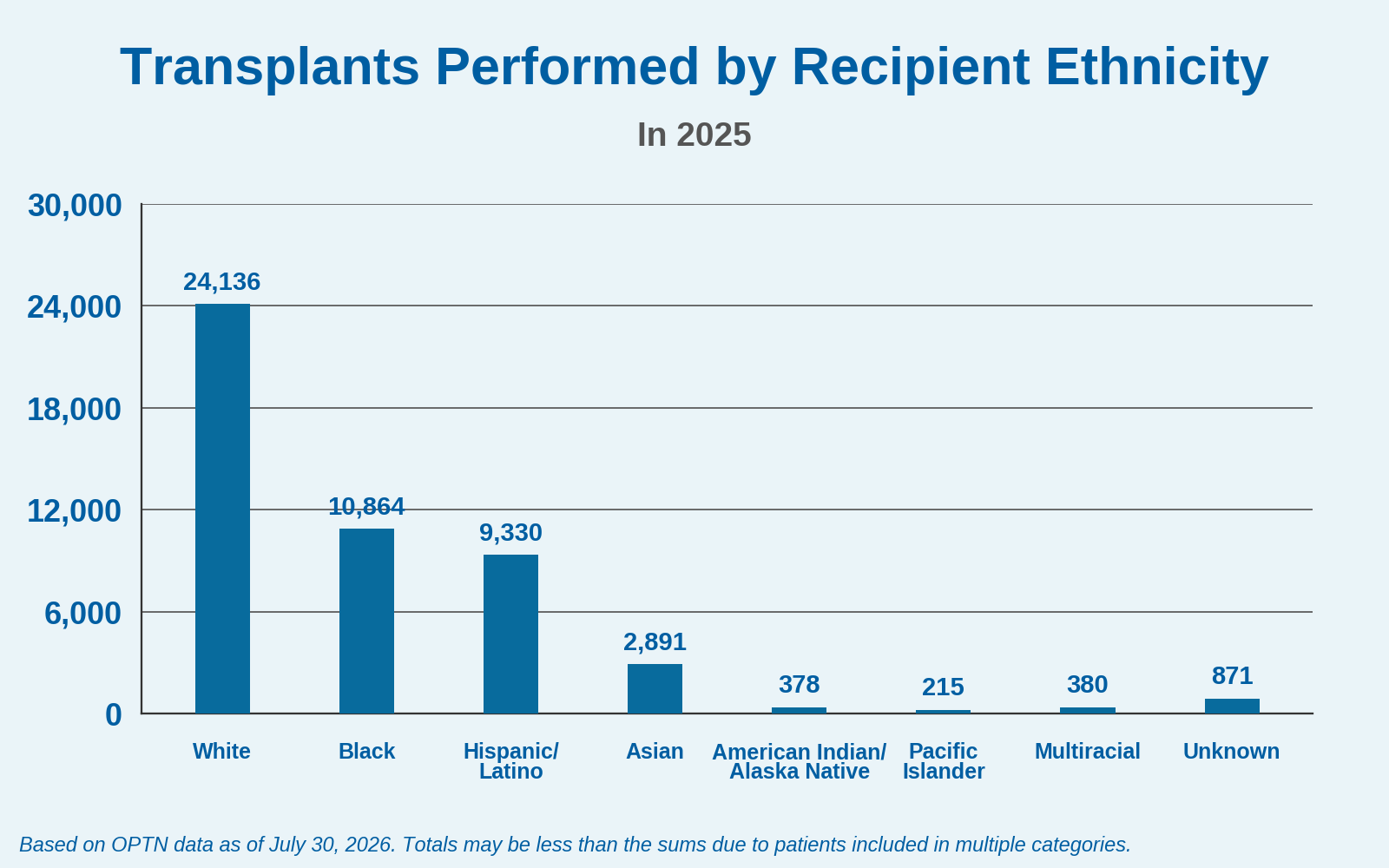
Detailed description of Transplants Performed by Recipient Ethnicity
According to a sample of the U.S. population, 93% of adults support organ donation but only 53% are actually signed up as donors. Source: 2025 National Survey of Organ Donation Attitudes and Practices.
People of all ages can help save lives through organ donation. In fact, age alone does not determine whether someone can become a donor.
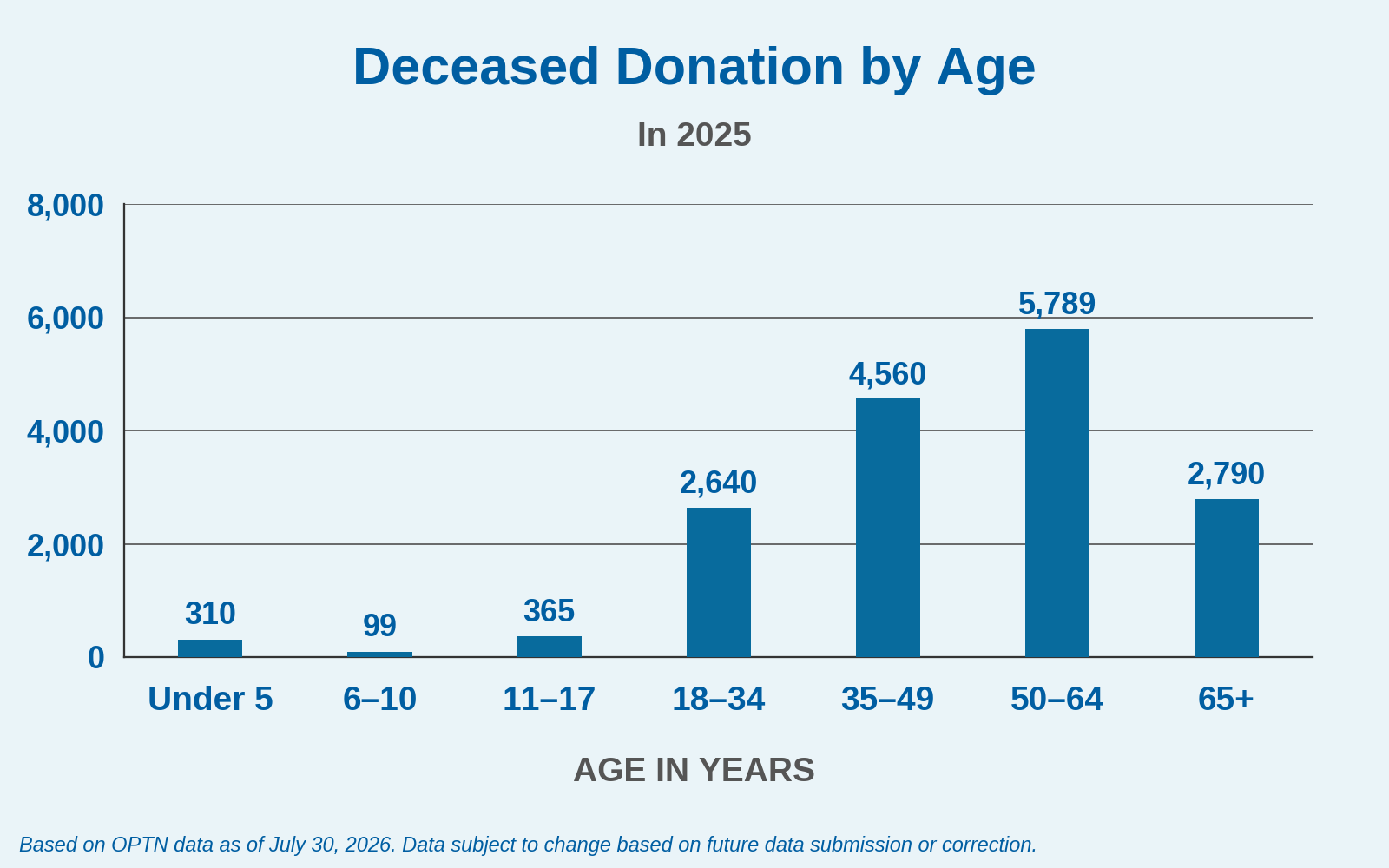
Detailed description of Deceased Donation by Age
You’re never too old to save lives as a donor. One U.S. man gave the gift of life—and a liver—when he was 100 years old.
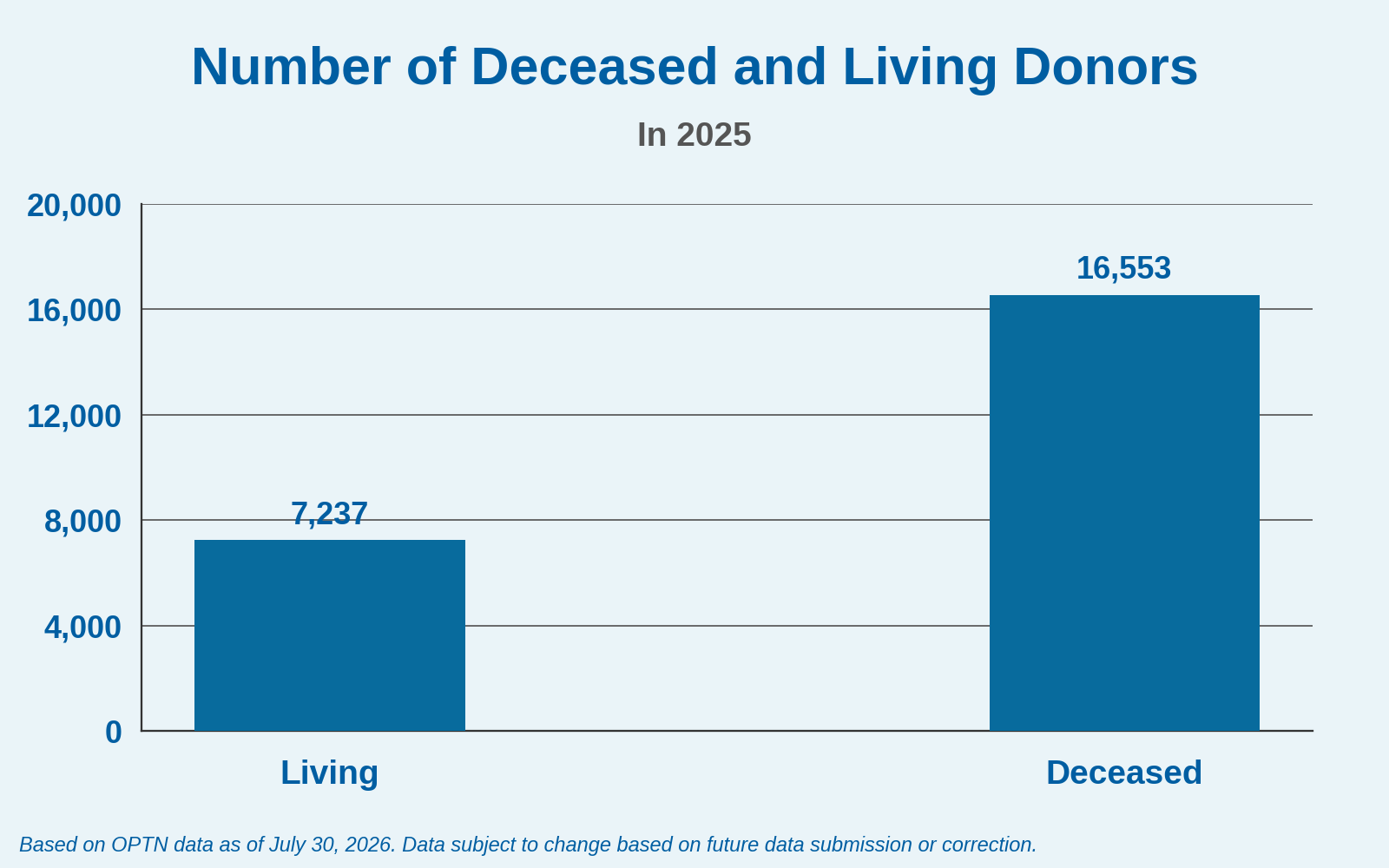
Detailed description of Number of Deceased and Living Donors
Some people also choose to save lives as living donors by donating certain organs or tissues while they are still alive. Learn more about living donation.
More than 170 million people in the United States have registered as organ, eye, and tissue donors.
While that number reflects strong public support for donation, not everyone who registers is able to become a deceased donor. In fact, only about 3 out of every 1,000 people die in circumstances that allow for deceased organ donation. That’s why every donor registration matters.
Learn more about the deceased donation process and how signing up as an organ, eye, and tissue donor can help save and enhance lives.
Date Last Reviewed: